Few things slow down a car loan like a missing piece of paper. You find the vehicle, you’re ready to move, and then a lender asks for something you don’t have on hand. A little preparation avoids that. This guide covers the documents lenders in BC commonly ask for, why they ask, and what you can do if your situation doesn’t fit the standard list.
Requirements vary by lender and by your circumstances, so treat this as a practical starting point rather than a fixed rulebook.
Why lenders ask for documents at all
A lender is answering two questions: Are you who you say you are? and Can you reasonably repay this loan? Every document on the list supports one of those two questions. Knowing that makes it easier to figure out substitutes when you’re missing something.
Proving who you are
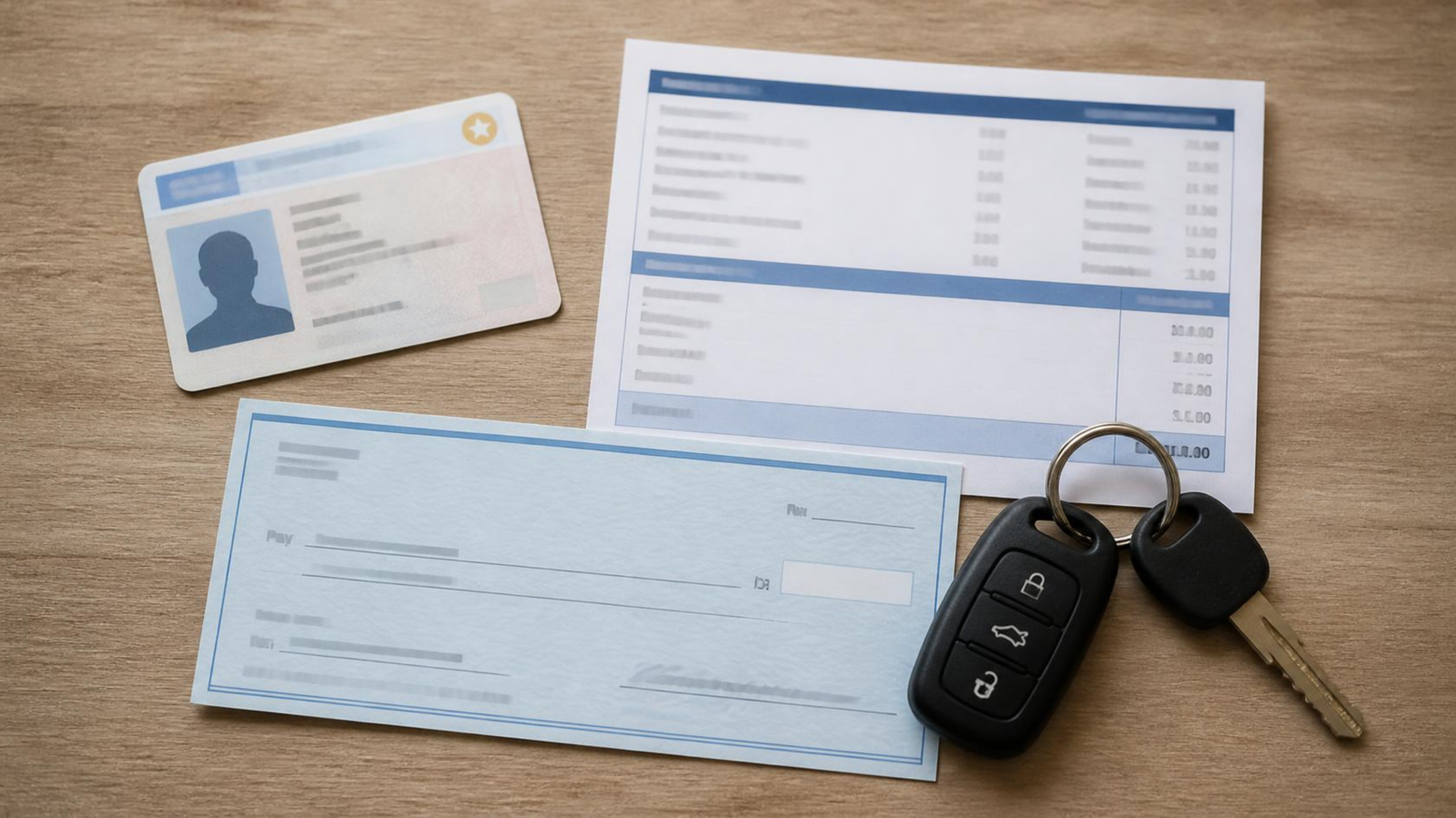
Expect to show valid government-issued photo identification. In BC, that’s most often a BC driver’s licence or BC Services Card, or a passport. If you’re financing a vehicle, you’ll also need a valid driver’s licence to drive it, so lenders and dealers often ask for it regardless. Some lenders will also ask for your Social Insurance Number to run a credit check. You don’t have to provide it, but a lender may be unable to assess your application without it, so ask how they use it and why.
Proving your income
This is where most of the variation comes in, and where preparation pays off. Employed applicants typically provide recent pay stubs, and sometimes a letter of employment confirming position, start date and pay. Some lenders also want to see bank statements showing your pay going in.
If your income isn’t a standard paycheque, the paperwork changes. Self-employed applicants are often asked for Notices of Assessment from the Canada Revenue Agency. People on pension or disability benefits can usually use benefit statements or award letters. If you’ve recently started a job, a signed offer letter can help bridge the gap while pay stubs accumulate. If you earn through several sources, gather documentation for each one, since lenders generally consider the full picture.
Proving where you live
Lenders usually want confirmation of your current address. A recent utility bill, bank statement, or tenancy agreement commonly does the job. If you’ve moved recently, expect a question or two about your previous address, since stability is part of how lenders read an application.
Banking and insurance details
Many loans are repaid by automatic withdrawal, so you may be asked for a void cheque or direct deposit form from your bank. Before you take delivery, you’ll also need proof of vehicle insurance. In BC, basic insurance comes through ICBC, and you’ll need it to register the vehicle. A lender typically wants to be named on the policy, since the vehicle secures the loan.
When something is missing
Don’t assume a missing document ends the conversation. A few common situations:
No recent pay stubs. A letter of employment plus bank statements may be accepted by some lenders in their place.
Limited credit history. There’s no document for this, but a larger down payment, a co-signer, or additional proof of stable income can offset it for some lenders.
Cash or irregular income. Bank statements showing regular deposits, plus tax filings, become your best evidence. This is a good reason to keep deposits consistent and keep your tax filings current.
Documents from another country. Foreign pay records and credit reports often aren’t used by Canadian lenders, so be ready with Canadian bank statements and employer letters instead.
An illustrative example
Consider a hypothetical applicant, Sam, who works full time at a Burnaby warehouse and has been there eight months. Sam brings a photo ID, his last three pay stubs, a letter of employment, a recent hydro bill, and a void cheque. That’s a complete package, and it takes a lender minutes rather than days to review. Now imagine Sam had skipped the employment letter. The lender would likely come back with a request, and the application would pause. The paperwork didn’t change Sam’s eligibility, but it did change how fast things moved. (Sam is an invented example for illustration, not a real customer.)
A few tips to speed things up
Scan your documents into one folder on your phone before you apply, so you can send them quickly. Check that names and addresses match across documents; small mismatches cause delays. Keep your documents current, because a pay stub from six months ago may not be accepted. And answer lender questions honestly, even when the honest answer is inconvenient, because inconsistencies create more problems than the underlying facts do.
Frequently asked questions
Do I need a Social Insurance Number for a car loan?
Lenders commonly use it to confirm identity and check credit, but ask the lender how they use it before you share it.
Can I get approved without pay stubs?
Possibly. Some lenders accept a combination of bank statements, an employment letter, or tax documents.
Do I need insurance before I apply?
Usually you need proof of insurance before you take delivery of the vehicle, not before you apply.
Will lenders accept documents in a language other than English?
Often they’ll want certified translations or Canadian equivalents, so ask in advance.
How recent should my documents be?
As a general guide, recent pay stubs and utility bills from the last one to three months, though lenders set their own rules.
Internal link suggestions
- Anchor “how car loan approval works in British Columbia” → your existing approval-process post
- Anchor “how lenders measure affordability” → Article 12 (debt service ratios)
- Anchor “get pre-approved before you shop” → Article 9 (pre-approval)
External references
- FCAC, Financing a car: https://www.canada.ca/en/financial-consumer-agency/services/loans/financing-car.html
- ICBC, vehicle registration and insurance: icbc.com
Call to action
Gathering paperwork and not sure it adds up? Contact Car Finance BC to talk through your situation and see what options may be available, subject to eligibility.